The preview video shows exactly what is in the MIDI file, left hand and right hand visualized.
Practice mode preview
First 30 secondsFull duration: 1:46 · unlocks after purchase
Tea For Two
Solo piano · recorded 1957MIDI file
€4.99
VAT included · instant download after checkout
Secure Stripe checkout with cards, iDEAL, PayPal, Apple Pay and Google Pay. Your invoice is emailed automatically.
This file is licensed for your personal practice and study. Please do not use it commercially, for example in a monetised video, a public performance, a stream or a release, without approval first. If that is what you have in mind, reach out via the contact page and we will sort it out.
Vincent Youmans wrote Tea For Two for No, No, Nanette and audiences first heard it in 1924: a melody made of one short figure, repeated and nudged along until it sticks. It became the biggest success of his career and a tune every pianist ends up knowing.
Cole had already cut a studio instrumental of it in 1955 for The Piano Style of Nat King Cole. This is the other one, played live on his own television show in 1957. The Nat King Cole Show had run on NBC since November 1956, the first nationally broadcast American programme hosted by a Black performer, and no national sponsor would take it; Cole ended it himself that December with a line that outlived the show: Madison Avenue is afraid of the dark. So this is a light 1920s soft-shoe number played on a programme that was being cancelled underneath him, and played beautifully, the left hand walking while the right paraphrases rather than decorates.
The transcription follows the performance note for note, with the two hands separated so the voicings can be taken apart at any tempo.
- Artist
- Nat King Cole
- Genre
- Jazz Piano
- Recorded
- 1957
- Difficulty
- Intermediate
- Duration
- 1:46
- Tempo
- 120 bpm
- Key
- Channels
- 2 · left and right hand
- Format
- .mid · Type 1
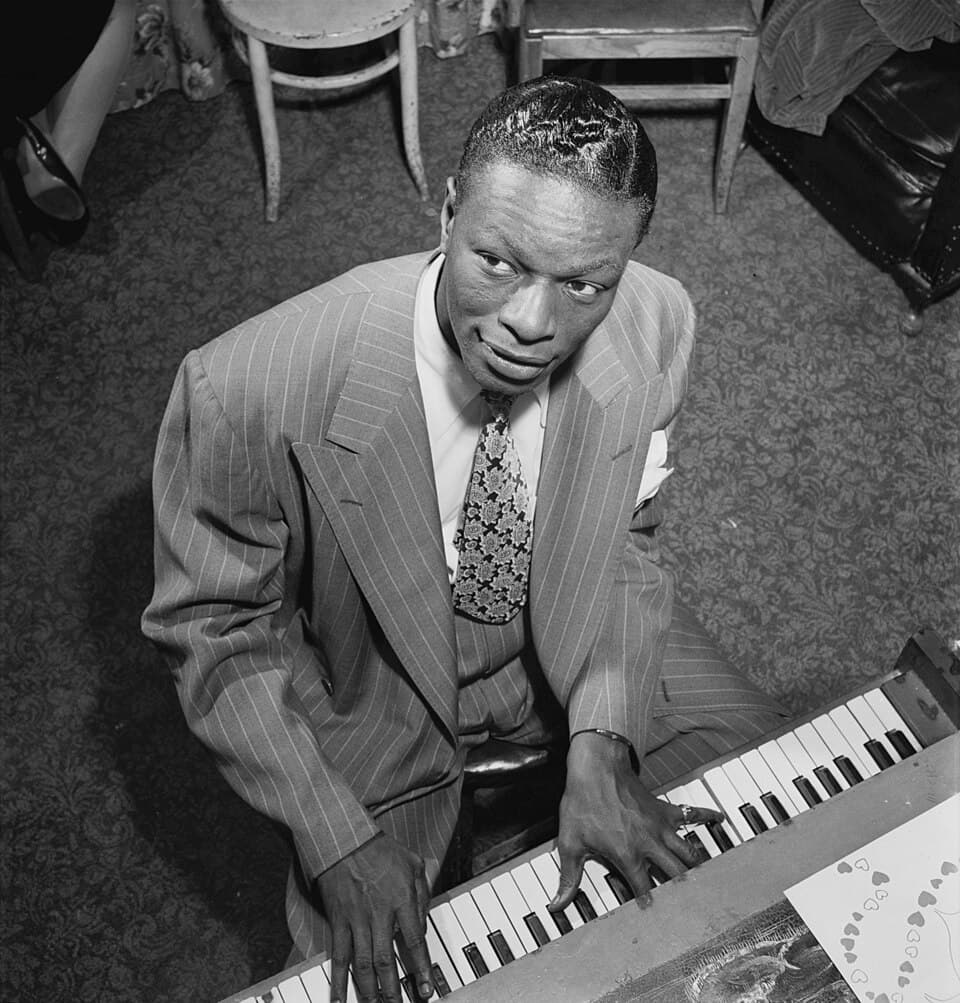
Nat King Cole
Nat King Cole was one of the finest jazz pianists of his generation before the world decided he was a singer. Spare, swinging and harmonically sharp, he is the model Oscar Peterson built his early style on.