Composer
Zez Confrey
1 transcription, every one with separated left and right hands.
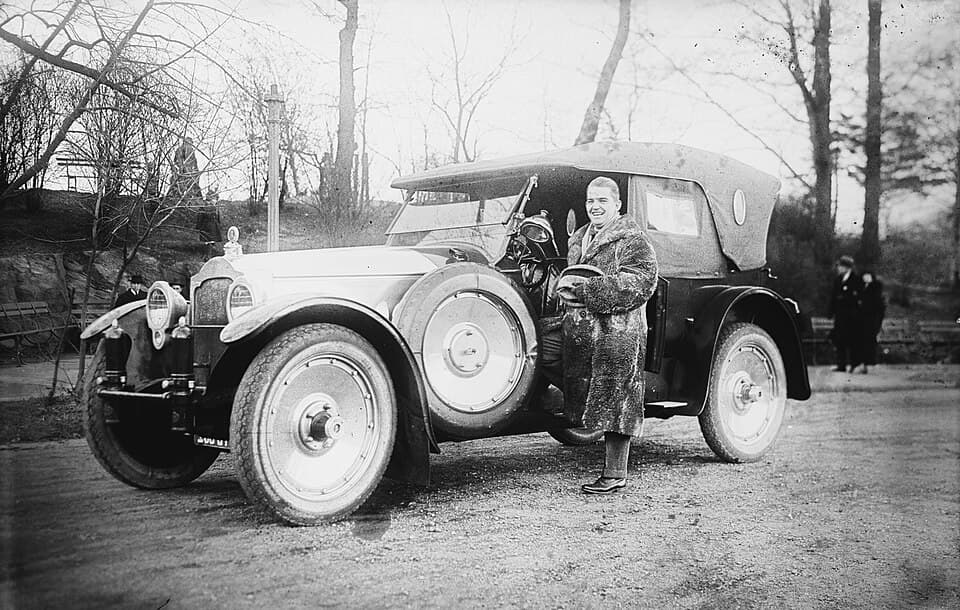
Zez Confrey
Zez Confrey (1895-1971) was born Edward Elzear Confrey in Peru, Illinois, and trained as a classical pianist before the player piano gave him a living. Through the 1910s and 1920s he cut more than 170 rolls for the QRS and Ampico companies, learning the arranger's trade of packing a keyboard with more notes than two hands could easily manage. In 1921 he wrote the piece that made his name, Kitten on the Keys, said to have come from watching his grandmother's cat pick its way across the keys. The sheet music sold in the hundreds of thousands and gave a whole style its calling card.
That style was novelty piano: ragtime syncopation dressed in the roll arranger's tricks, with rapid parallel runs, broken octaves, whole-tone glints and cross-rhythms that looked improbable on the page. Confrey wrote for the ambitious amateur as much as the virtuoso, and pieces such as Stumbling (1922), Dizzy Fingers (1923) and Nickel in the Slot (1923) found their way onto parlour pianos across the decade.
On 12 February 1924 he shared the bill at Aeolian Hall in Paul Whiteman's An Experiment in Modern Music, the concert that closed with the premiere of Gershwin's Rhapsody in Blue. His own numbers, Kitten on the Keys among them, came earlier in the evening. The writing rewards slow, patient study: taken down to half speed in practice mode, its glittering runs resolve into plain, teachable shapes for each hand.