Composer
Willie "The Lion" Smith
2 transcriptions, every one with separated left and right hands.
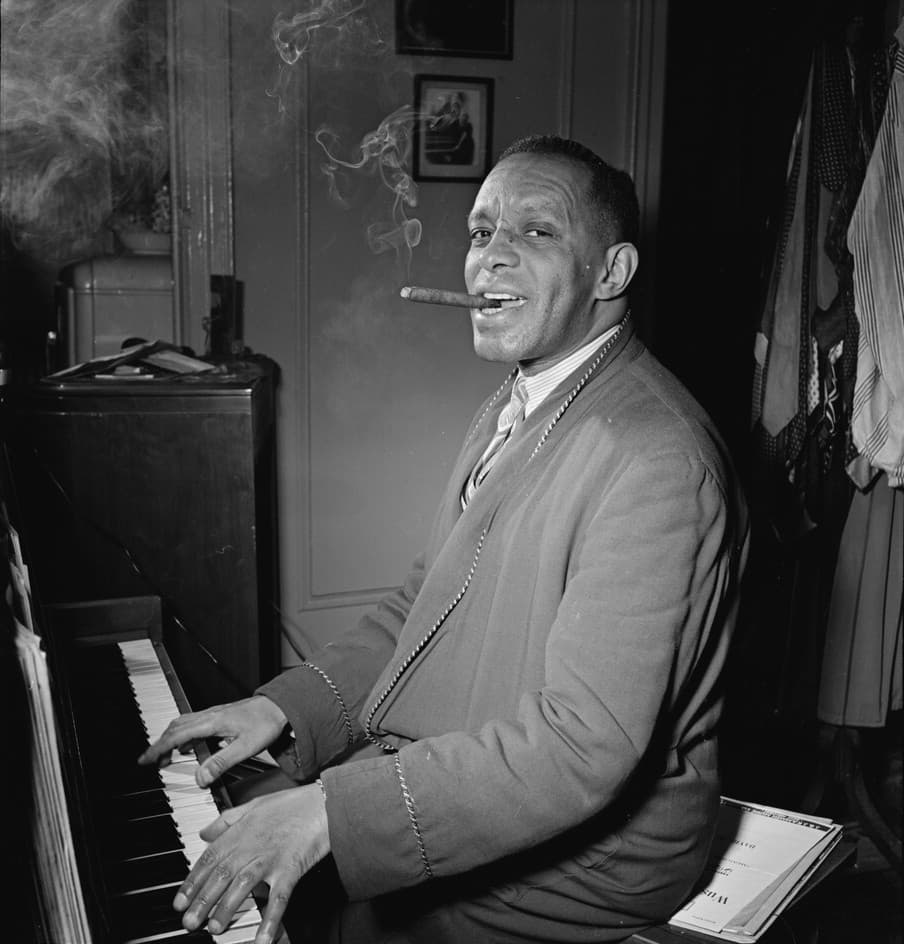
Willie "The Lion" Smith
Willie "The Lion" Smith (1893-1973) was born in Goshen, New York, and grew up in Newark, absorbing ragtime, church music and the sounds of the theatre pit. He always claimed a birth year of 1897, though his draft record tells a different story. Along with James P. Johnson and Fats Waller, he was one of the architects of Harlem stride, the first great solo tradition in jazz piano: a rolling left hand striding between bass notes and chords while the right hand spun out ornament and melody.
The nickname came out of the First World War, where Smith served as an artillery gunner in France and earned a reputation for coolness under fire. His playing carried some of that swagger, but there was another side to it. On January 10, 1939 he cut fourteen solo sides for Commodore in a single day, among them originals like "Echoes of Spring" and "Morning Air." These were small tone poems, half stride and half impressionism, with a harmonic sense closer to Debussy than to the barrelhouse.
Duke Ellington, who paid tribute with his "Portrait of the Lion," called him a lasting influence on everyone who followed. Smith kept performing into the 1970s and set down his story in the 1964 memoir "Music on My Mind." His records reward patient study: slowed down and opened in practice mode, with the two hands laid out on separate channels, that striding bass and its floating harmony become something you can learn under your own fingers.