Genre
Stride Piano
9 files in this style.
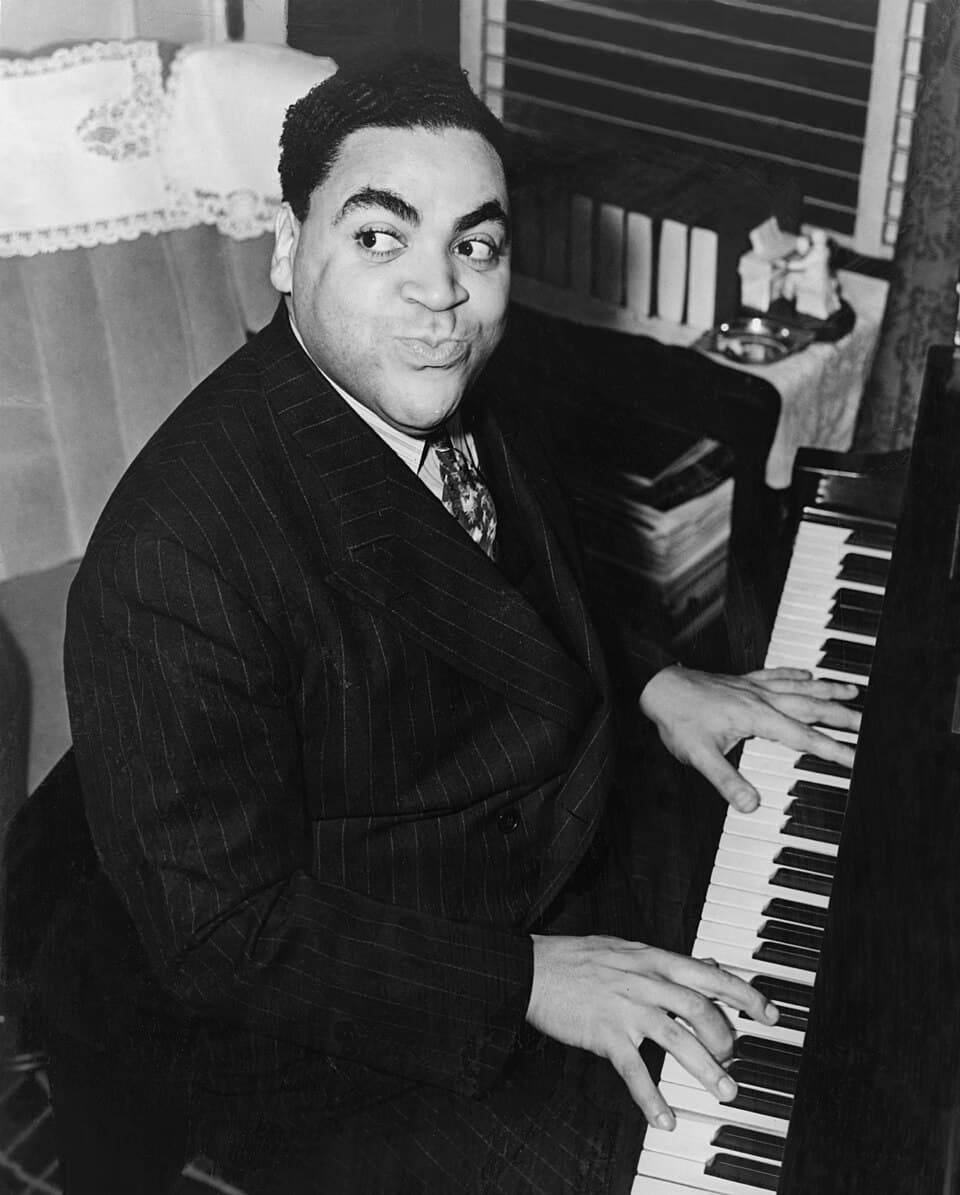
Stride Piano
Stride piano grew out of ragtime in the Harlem of the 1910s and 1920s, refined at rent parties and in the cutting contests where pianists tested one another late into the night. The name describes what the left hand does: it strides back and forth across the keyboard, planting a low bass note on the strong beats and answering with a chord higher up, keeping a steady, propulsive pulse. Over that engine the right hand is free to spin melodies, embellishments and fast runs, so a single player can sound like a whole band.
The style's founding figure was James P. Johnson (1894-1955), whose Carolina Shout became the test piece every young pianist had to master, and whose The Charleston set a decade dancing. His pupil Fats Waller (1904-1943) carried stride to a wide audience with Ain't Misbehavin and Honeysuckle Rose, leavening the fireworks with warmth and wit. Alongside them, Willie the Lion Smith (1893-1973) brought a more reflective, impressionist touch, and the tradition fed directly into the playing of Duke Ellington, Count Basie and Art Tatum.
Stride asks a great deal of the left hand: the leaps are wide, the tempos often brisk, and the two hands must stay independent while swinging together. That is exactly why it rewards patient study. Slowing a recording down to hear how the bass and chord alternate, or opening a transcription in practice mode with the hands on separate channels, lets you build that leaping motion at a manageable speed before bringing it up to tempo.
Johnny Guarnieri · 1975
MIDI fileView product€8.99
Oscar Peterson · 1975
MIDI fileView product€8.99